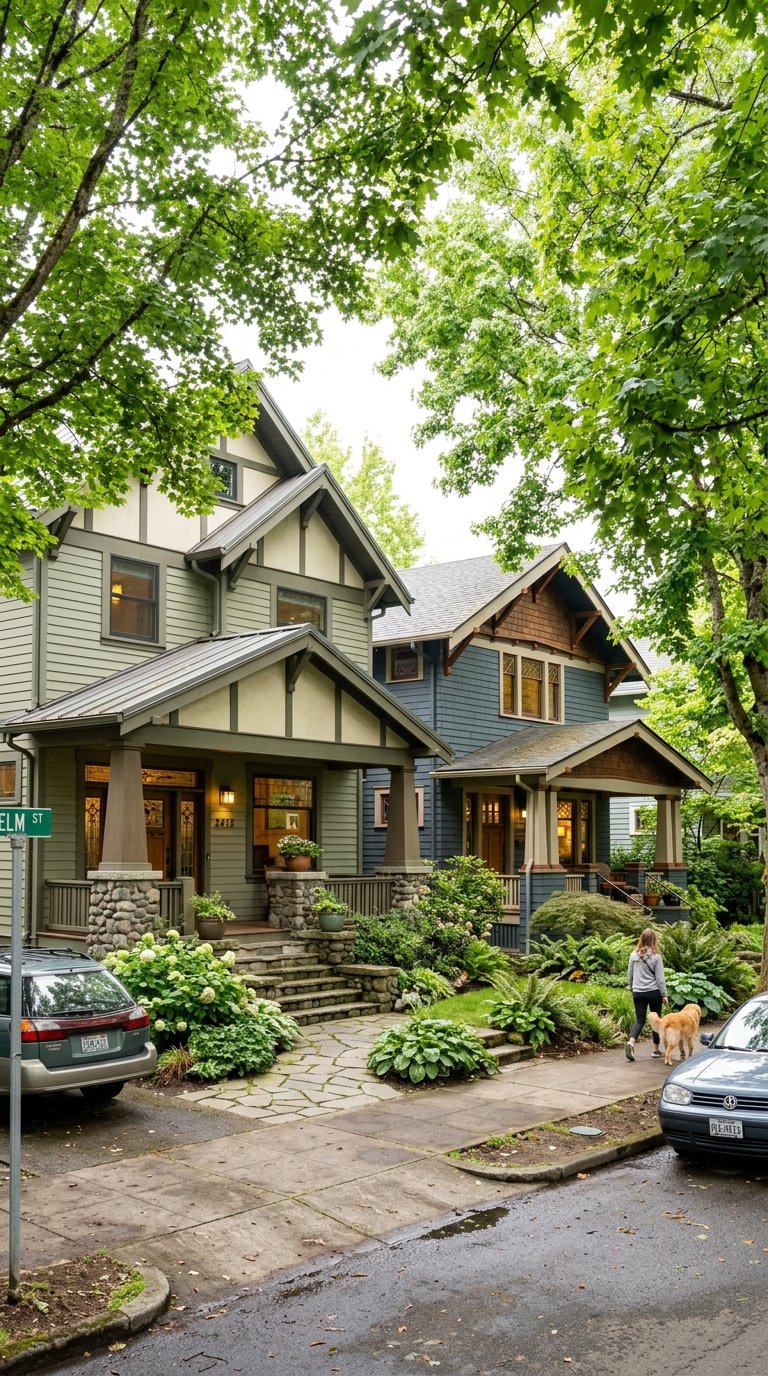
What makes one neighborhood hold value over time while others rise and fall with each market cycle? In Ladd’s Addition, the answer is not just beautiful old homes. It is a rare mix of fixed neighborhood form, preservation rules, mature public spaces, and a close-in Southeast Portland location that is hard to duplicate. If you are thinking about buying, selling, or holding property here, it helps to understand why this area tends to stand apart. Let’s dive in.
Scarcity starts with the neighborhood plan
Ladd’s Addition was platted in 1891 and is widely recognized as Oregon’s oldest planned community. It covers about 128 acres with roughly 870 residences, bounded by Hawthorne, Division, 20th, and 12th. That matters because neighborhoods with a well-defined historic footprint tend to be hard to reproduce.
This is not a place where large-scale redevelopment can easily remake the streetscape. The original Victorian-era residence park layout still shapes how the neighborhood feels and functions today. Most homes are also within a short walk of nearby commercial corridors, which adds convenience without changing the district’s underlying character.
Historic character limits oversupply
Long-term value often comes down to supply. In Ladd’s Addition, the supply story is unusually simple: there is only so much of it, and the form is largely fixed. That kind of built-in scarcity can support demand over time, especially in a close-in Portland location.
The National Register listing ties the district to community planning and development, landscape architecture, commerce, architecture, and social history. In practical terms, that recognition helps explain why the neighborhood feels distinct from many nearby areas. Buyers are not just comparing a house here to another house down the road. They are comparing a home within a very specific and protected setting.
Trees and roses add lasting appeal
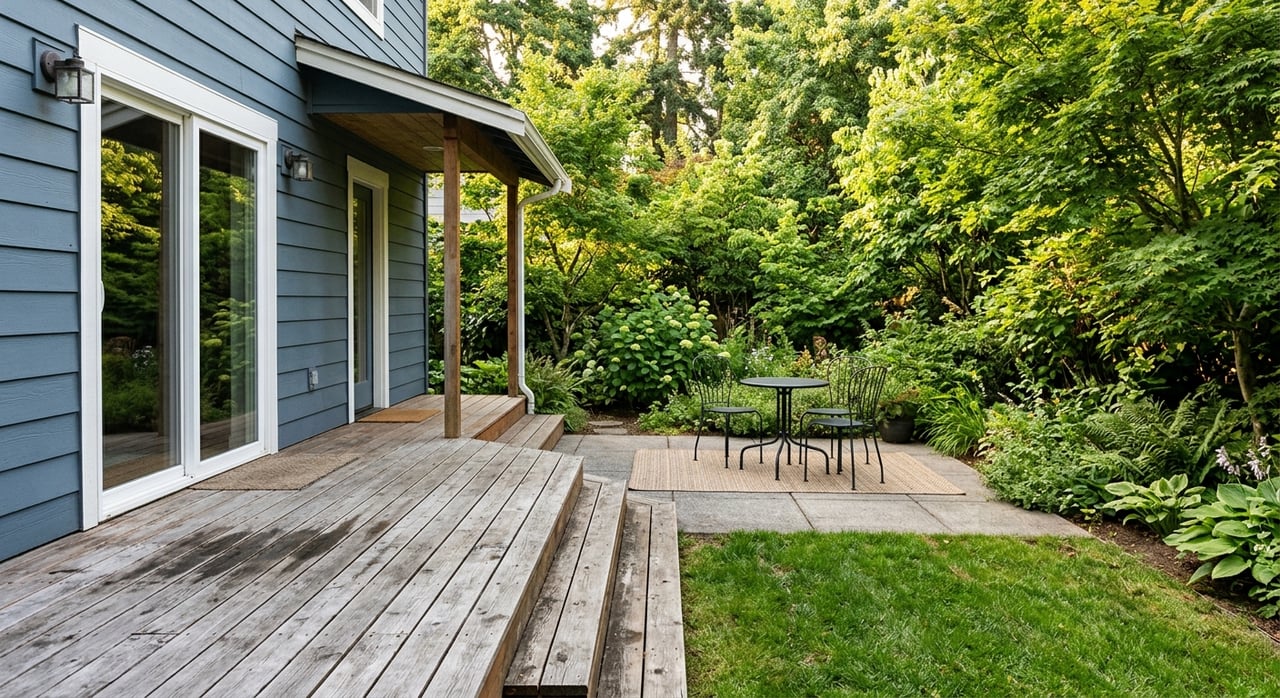
Ladd’s Addition’s public realm is a major reason the neighborhood remains memorable. The district is known as one of Portland’s most tree-dense inner-city neighborhoods. The original plan included 1,600 street trees, and conservation guidelines protect about 1,300 existing deciduous street trees.
The neighborhood’s rose gardens add another layer of identity, with more than 3,000 roses still in place. These details do more than create curb appeal. They help form a mature streetscape that would be extremely difficult to recreate elsewhere in close-in Southeast Portland.
Preservation rules support consistency
Historic districts do not stay intact by accident. In Portland, historic-resource rules require review for alteration, addition, new construction, demolition, and relocation within historic districts. That means change can happen, but it is managed through a clear framework.
In Ladd’s Addition, conservation guidance emphasizes continuity of materials, scale, detailing, orientation, and setback. The guidelines favor street-facing buildings, historic front setbacks, rear parking, and limited building height. For owners and buyers, that can create more confidence that the broader streetscape will not shift quickly or unpredictably.
Why that matters for value
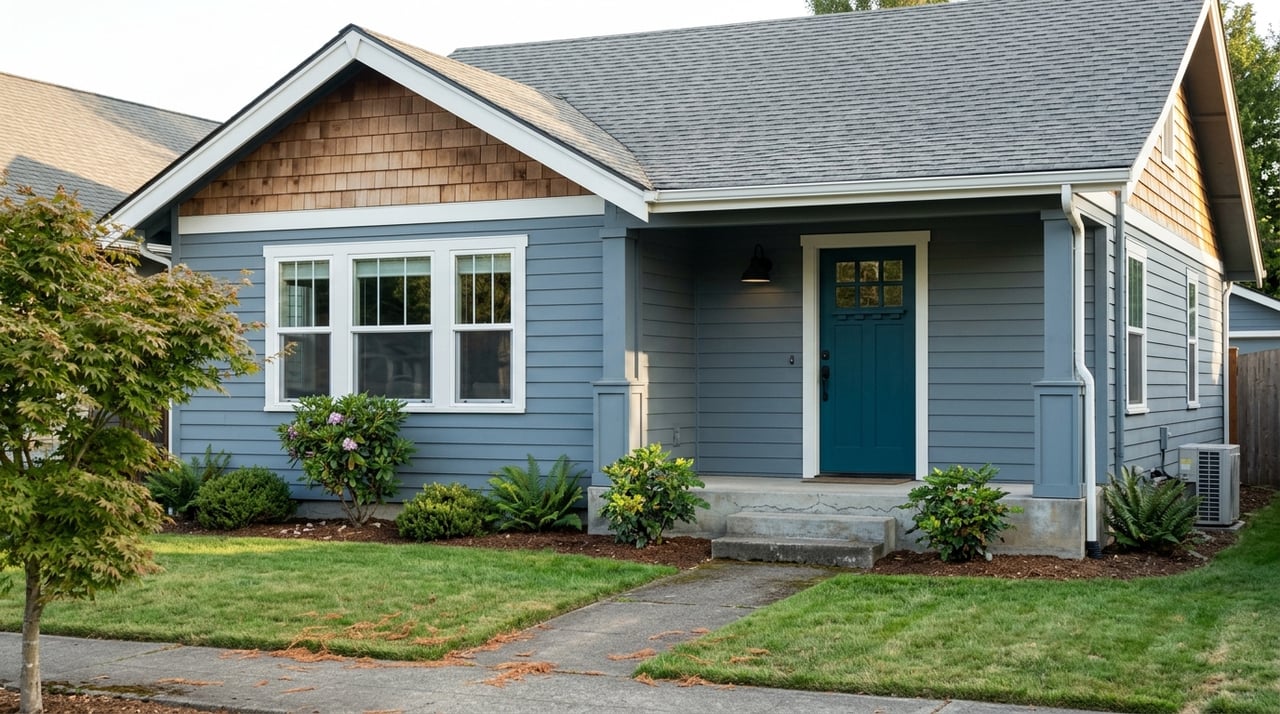
When a neighborhood keeps a coherent visual pattern, buyers often understand what they are paying for. In Ladd’s Addition, you see architectural variety, but within a consistent scale and siting pattern. APA describes the housing stock as including Craftsman, Mission, Tudor, and bungalow homes.
That balance is important. Too much inconsistency can weaken a neighborhood’s identity, while too much sameness can feel flat. Ladd’s Addition sits in a sweet spot where different home styles still contribute to one recognizable whole.
Downzoning reduced redevelopment pressure
Another factor behind long-term value is what did not happen here. According to APA, residents helped secure downzoning of much of the area from duplex to single-family in Portland’s first comprehensive plan. That reduced redevelopment pressure and helped preserve the neighborhood’s original pattern.
For buyers, this does not guarantee future appreciation. Real estate never works that way. But it does help explain why Ladd’s Addition behaves more like a preservation-backed long hold than a redevelopment story.
Market data shows a premium position
The neighborhood’s value story is also visible in recent pricing. Redfin’s March 2026 tracker shows a median sale price of $1,137,500 in Ladd’s Addition, with 6 homes sold and a median 32 days on market. Nearby Hawthorne tracked at $744,000, Hosford-Abernethy at $793,000, Richmond at $550,000, and Sunnyside at about $479,500.
That comparison places Ladd’s Addition at the premium end of close-in Southeast Portland. Even allowing for different housing stock and small sample size, the gap is meaningful. Buyers and sellers alike should view the neighborhood as a distinct micro-market rather than assuming it moves exactly like adjacent areas.
Read small-sample data carefully
It is important not to overstate short-term numbers. Redfin’s tracker showed a 60.3% annual increase, but with very few sales, year-over-year changes can look dramatic. In a neighborhood with limited turnover, one or two high-value sales can move the headline number significantly.
That is why the bigger takeaway is not a single annual percentage. The more credible story is consistent premium positioning, tight supply, and a long-standing identity that continues to attract buyers.
Days on market tells a useful story
Ladd’s Addition’s median 32 days on market is slower than Hawthorne’s 10 days and Richmond’s 13 days. That does not automatically point to weak demand. More likely, it reflects a narrower buyer pool for higher-priced, historic homes in a very specific neighborhood.
In other words, demand may be selective rather than broad. That is common in premium submarkets. Buyers often take longer to commit, but they are shopping for something they cannot easily find elsewhere.
Nearby amenities strengthen the hold case
A neighborhood does not need to contain every amenity within its own borders to remain desirable. Ladd’s Addition benefits from sitting directly between Hawthorne and Division, two well-known commercial corridors in Southeast Portland. That nearby amenity base supports daily convenience and long-term relevance.
Public sources describe the surrounding area as active and walkable, with shops, restaurants, and coffee houses nearby. PBOT also describes Hawthorne as a long-standing business corridor with improved pedestrian access. For homeowners, that means the value story is tied not only to the district itself, but also to the strength of the surrounding area.
Public investment matters too
Infrastructure upgrades are easy to overlook, but they can have a real effect on long-term livability. Portland’s green-street and sewer project in Ladd’s Addition was designed to increase sewer capacity, relieve basement backup risk, and reduce street flooding. In an older neighborhood, that kind of public investment matters.
It signals that the area is not simply preserved as a snapshot in time. It is also being supported as a place where people continue to live, maintain property, and plan for the future.
Ownership here rewards a long view
Ladd’s Addition is appealing, but it is not a set-it-and-forget-it kind of purchase. Redfin and First Street currently flag the neighborhood for moderate flood risk and moderate heat risk. That does not erase the area’s strengths, but it does mean buyers should think like long-term stewards.
If you own here, maintenance, planning, and a realistic understanding of older homes all matter. If you want a neighborhood where preservation, mature landscaping, and fixed character support value over time, that tradeoff may be worth it. The best fit is often a buyer who values both the home and the setting around it.
What buyers should keep in mind
If you are considering a home in Ladd’s Addition, focus on more than finishes and square footage. The neighborhood’s value comes from both private property and public setting. It helps to evaluate each home in the context of preservation rules, nearby amenities, infrastructure, and long-term upkeep.
A smart buyer approach includes:
- Reviewing how historic district rules may affect future changes
- Understanding that resale may depend on a narrower, more targeted buyer pool
- Looking closely at maintenance needs common in older housing stock
- Considering how mature trees, gardens, and street design contribute to appeal
- Weighing the benefits of proximity to Hawthorne and Division
What sellers should understand
If you are selling in Ladd’s Addition, your home is unlikely to compete on the same terms as a standard listing in a broader neighborhood search. Buyers here are often responding to context, architecture, and the rarity of the setting. That means presentation and pricing strategy matter.
A strong listing should tell a clear story about the home’s place within the neighborhood, not just list features. Professional photography, video, 3D tours, and thoughtful marketing can help buyers understand why a Ladd’s Addition property commands attention at the higher end of the Southeast Portland market.
Why the value thesis holds up
Put it all together, and the long-term value case for Ladd’s Addition is straightforward. The neighborhood has a fixed and historic form, preservation rules that protect visual consistency, mature landscaping that is hard to replicate, and a location between two durable Southeast Portland corridors. It also benefits from public infrastructure investment that supports ongoing livability.
That does not mean prices only go one direction, and it does not mean every buyer should stretch to buy here. It does mean Ladd’s Addition stands on stronger long-term fundamentals than many neighborhoods that rely mainly on trend or redevelopment potential. If you are making a real estate decision here, a calm, data-driven approach usually works best.
If you want help evaluating a Ladd’s Addition home or positioning one for sale, Devin Arthurs offers direct, owner-led guidance with clear communication, local market perspective, and modern marketing tools.
FAQs
Why do Ladd’s Addition homes often sell at a premium?
- Ladd’s Addition combines scarce historic housing, preservation-backed neighborhood character, mature tree-lined streets, and a close-in Southeast Portland location near Hawthorne and Division.
How do historic district rules affect Ladd’s Addition homeowners?
- Portland requires review for alterations, additions, new construction, demolition, and relocation in historic districts, so owners should expect a more structured approval process for exterior changes.
Is Ladd’s Addition a fast-moving real estate market?
- Not always. Recent data showed a median 32 days on market, which is slower than some nearby areas and may reflect a smaller buyer pool for higher-priced historic homes.
What makes Ladd’s Addition different from nearby Southeast Portland neighborhoods?
- The neighborhood stands out for its 1891 planned layout, protected historic character, dense canopy of street trees, rose gardens, and premium pricing relative to several nearby close-in neighborhoods.
What should buyers consider before purchasing a home in Ladd’s Addition?
- Buyers should look at historic district guidelines, ongoing maintenance needs, moderate flood and heat risk, and the long-term value of the neighborhood’s preserved character and surrounding amenities.