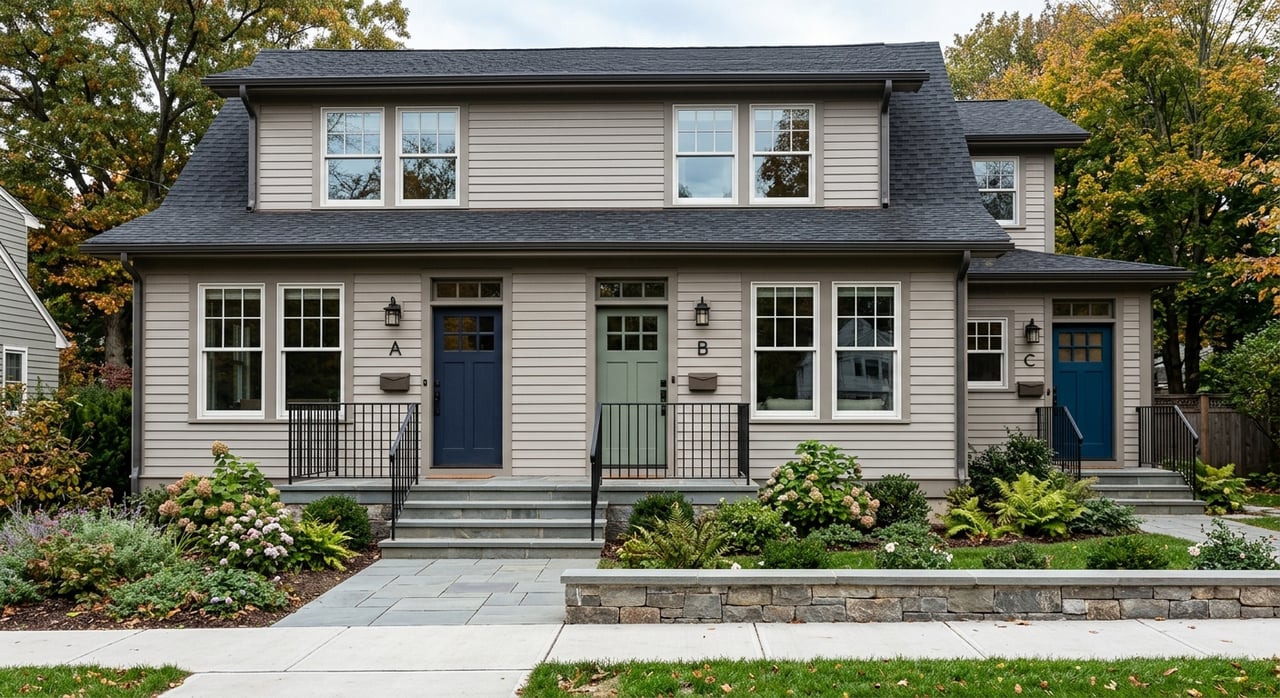
If you are looking for a small multifamily investment in Portland, Buckman deserves a closer look. This is a dense, renter-heavy inner southeast neighborhood where zoning, block-by-block location, and permit risk can matter just as much as price. If you want to invest with fewer surprises, this guide will help you focus on what to verify, what to underwrite carefully, and where Buckman may offer real opportunity. Let’s dive in.
Why Buckman Stands Out
Buckman is Portland’s first eastside neighborhood, bounded by SE 28th, Hawthorne Boulevard, East Burnside Street, and the Willamette River. The City of Portland describes east Buckman as more residential and west Buckman as more industrial. That distinction matters because a property’s exact location can affect noise, parking, access, and renter appeal.
The neighborhood profile also points to steady rental demand. Buckman has a population of 11,151, density of 9,697 people per square mile, and homeownership of just 12%. The same city data shows an 8.3% vacancy rate and median gross rent of $1,388, which supports the case for investors who are evaluating smaller rental properties.
For local investors, the bigger story is how the neighborhood functions day to day. Buckman has access to parks and amenities like Colonel Summers Park, Colonel Summers Community Garden, and the Eastbank Esplanade. TriMet’s frequent-service network also serves the area, including the 14-Hawthorne and 15-Belmont/NW 23rd lines, with service every 15 minutes or less for much of the day.
What Small Multifamily Means in Buckman
In Buckman, small multifamily is not one simple category. Depending on the parcel, you may be looking at a duplex, triplex, fourplex, or a small apartment-style building. The important point is that Portland is a parcel-by-parcel zoning market, so you need to verify what is allowed on the specific site before you assume a deal works.
Portland states that every property has a base zone, and overlay zones or plan districts can add extra rules that may override base-zone allowances. That means a promising address on paper may still have constraints that change the deal. PortlandMaps is the correct starting point for checking the official zoning, overlays, and plan district details.
In Portland’s single-dwelling zones, duplexes are allowed in R20 through R2.5. Triplexes and fourplexes are also allowed in those same zones if the lot meets lot-size and maintained-street-frontage standards. The required minimum lot area for triplex or fourplex development can range from 1,500 square feet in R2.5 to 4,200 square feet in R7.
In multi-dwelling zones, the range of possible uses expands. Portland allows houses, attached houses, ADUs, duplexes, triplexes, fourplexes, and multi-dwelling structures in RM1 through RX zones. The city’s code summary also shows maximum floor area ratio ranging from 1:1 in RM1 up to 4:1 in RM4 and RX, which can strongly affect feasibility on larger sites.
Why Micro-Location Matters
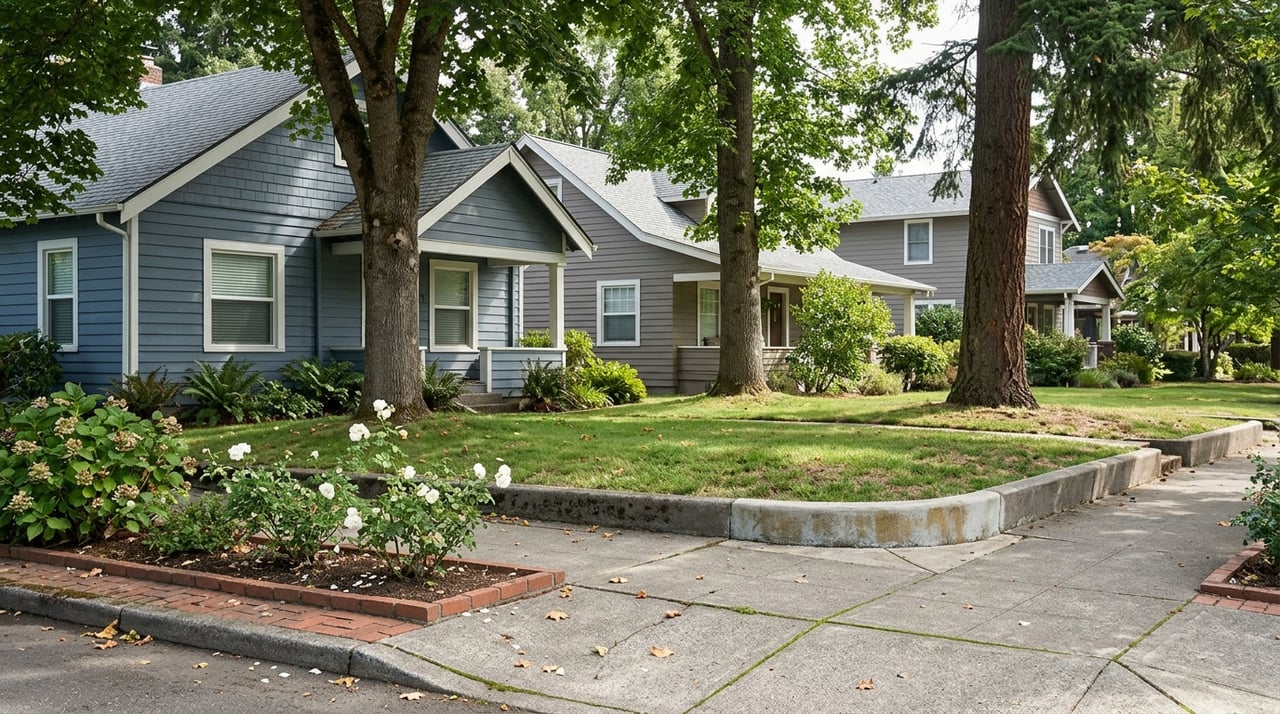
Not all Buckman properties compete the same way. The city’s east-versus-west distinction is one reason you should avoid underwriting only by neighborhood name. Two buildings in Buckman can perform very differently if one sits in a quieter residential pocket and the other is closer to more industrial activity.
That block-level variation can shape both rentability and resale. A better layout, cleaner street context, and easier access can matter more than broad neighborhood branding. In Buckman, condition and unit efficiency often carry more weight than investors expect.
Transit access also supports demand for practical units. Frequent-service bus lines and inner southeast Portland access tend to align well with compact layouts rather than large suburban-style floor plans. That does not guarantee rents, but it does help explain why smaller units may fit the neighborhood profile.
Rent Trends to Underwrite Carefully
Current listing-based rent snapshots for Buckman vary by source, but they generally cluster around about $1,550 to $1,775 for apartments. One-bedroom units appear to be around $1,500 to $1,525, while two-bedroom units are around $2,056 to $2,200 depending on the platform and listing set. That gives investors a useful range, but not a shortcut.
For broader context, Zillow’s Portland average rent was reported at $1,725 per month as of May 31, 2026, up 1.4% year over year. That suggests a functioning rental market, but not one that should be underwritten as fast-rising. In practical terms, your numbers should work with disciplined rent assumptions rather than optimistic growth projections.
This is especially important in a neighborhood like Buckman, where unit condition and exact location can shift performance. A renovated one-bedroom near strong transit access may lease very differently from a dated unit with a less efficient layout. Conservative underwriting leaves more room for those real-world differences.
Four Checks Before You Make an Offer
Verify zoning and legal use
Start with the parcel, not the marketing remarks. Portland’s zoning rules, overlays, and plan districts determine what is actually allowed, and those details can change your renovation or redevelopment path. Before you get attached to projected unit count or future upside, confirm the site’s legal framework on PortlandMaps.
Model rent-regulation risk
Oregon’s 2026 maximum allowable rent increase is 9.5% for qualifying residential rental tenancies. The state rent-stabilization law applies to residential rental units that are 15 years and older, and only one increase is allowed within a 12-month period. Within Portland city limits, a rent increase of 10% or more over a rolling 12-month period can trigger mandatory renter relocation assistance, and landlords must give 90 days’ written notice.
For investors, that means value-add strategy should be tied to compliance from day one. If your plan depends on aggressive post-close rent movement, the deal may be riskier than it first appears. Clear underwriting should account for timing, notice requirements, and any relocation-assistance exposure.
Underwrite taxes conservatively
If your plan includes renovation, conversion, or additions, future property taxes may change. Multnomah County states that it cannot estimate future taxes until property changes are valued. The county also notes that additions, remodeling, renovation, and rehabilitation can affect future taxes.
The county explains that assessed value is based on the lower of last year’s maximum assessed value plus 3% or the current real market value. That formula matters because the tax outcome after improvements is not always intuitive. A cautious tax assumption can help prevent a deal from looking better on a spreadsheet than it will in practice.
Budget for permit time and cost
Portland’s residential permitting guidance makes it clear that many middle-housing land divisions and change-of-use or change-of-occupancy situations are permit-driven. That can add time, cost, and complexity beyond a simple cosmetic remodel. If the upside depends on reconfiguring the property, your offer should reflect the approval path.
This is one of the easiest areas for investors to underestimate. A clean, straightforward rehab often looks very different from a project that changes use, density, or legal configuration. In Buckman, permit strategy should be part of your acquisition strategy.
When Separate Unit Sales Matter
If your long-term plan includes selling units separately, confirm middle-housing land division potential early. Portland allows these divisions only for certain duplex, triplex, fourplex, and cottage-cluster sites, and site conditions still matter. You do not want to discover a limitation after closing.
This point can shape exit value as much as rents do. A site that supports your intended ownership structure may offer a very different future than one that only works as a held rental. Early verification helps you compare deals on more than just cap rate or price per unit.
What a Strong Buckman Deal Often Looks Like
Based on the available neighborhood, zoning, and regulatory data, Buckman appears to be a practical fit for small multifamily when a few basics line up. You want a parcel with clear zoning, a realistic renovation path, and unit layouts that match renter demand. You also want an offer price that leaves room for compliance costs and conservative rent assumptions.
In many cases, the best opportunities are not the ones with the most dramatic upside story. They are the ones where the legal use is clear, the scope is manageable, and the block-level location supports leasing and resale. In a neighborhood as nuanced as Buckman, fewer surprises can be a major advantage.
If you are comparing duplexes, triplexes, fourplexes, or small apartment opportunities in Buckman, a local, owner-led broker can help you pressure-test the numbers and the property story before you commit. If you want candid guidance on a Buckman investment or help evaluating a Portland small multifamily purchase, schedule a free market consultation with Devin Arthurs.
FAQs
What makes Buckman appealing for small multifamily investors?
- Buckman is a dense, renter-heavy Portland neighborhood with 12% homeownership, an 8.3% vacancy rate, access to frequent transit service, and inner southeast amenities that can support demand for smaller rental units.
What property types count as small multifamily in Buckman?
- In Buckman, small multifamily may include duplexes, triplexes, fourplexes, and small apartment-style buildings, but what is allowed depends on the parcel’s zoning, overlays, and plan district rules.
How do zoning rules affect Buckman multifamily deals?
- Portland uses parcel-specific zoning, and overlay zones or plan districts can add rules that supersede base-zone allowances, so investors should verify the exact site details before underwriting unit count or redevelopment potential.
What rent assumptions make sense for Buckman apartments?
- Current listing-based snapshots generally place Buckman apartment rents around $1,550 to $1,775, with one-bedrooms near $1,500 to $1,525 and two-bedrooms near $2,056 to $2,200, so conservative underwriting is usually the safer approach.
What rent regulation should Buckman investors know?
- Oregon’s 2026 maximum allowable rent increase is 9.5% for qualifying residential tenancies, the state law applies to units 15 years and older with one increase allowed per 12 months, and Portland requires 90 days’ notice and may require renter relocation assistance for increases of 10% or more over a rolling 12-month period.
Why should Buckman investors budget carefully for permits and taxes?
- Portland permitting can be more involved for middle-housing land divisions or changes in use or occupancy, and Multnomah County notes that renovation or conversion work can change future property taxes after the improvements are valued.