Thinking about adding an ADU or buying a duplex in Sunnyside, but not sure which move pays off? You are not alone. Many Portland owners want flexible space and steady income, without overbuilding or overspending. In this guide, you will see how Sunnyside’s current rules shape your options, what costs to expect, how financing works, and simple payback math you can trust. Let’s dive in.
ADU vs. duplex in Sunnyside: the quick take
Building an ADU gives you rental income with a lower price tag and keeps your home in the single‑family market. Buying or creating a duplex usually delivers higher gross rent, but with higher costs and more management. Under Portland’s Residential Infill Project Phase 2 (RIP2), Sunnyside lots often allow both options by right, subject to zoning and overlays. Always confirm the exact rules on your parcel.
- ADU: flexible, lower total cost, smaller rent stream.
- Duplex: larger rent potential, higher cost, different buyer pool at resale.
What RIP2 allows on Sunnyside lots
RIP2 opened the door for more “middle housing” across Portland’s single‑dwelling zones. In Sunnyside, that often means you can add an ADU or create a duplex without a discretionary land‑use review when your lot meets standards. You must still meet height, setbacks, floor area, and lot coverage rules.
- Check zoning and overlays on your address with the City’s Portland Maps zoning lookup.
- Review the City’s overview of the Residential Infill Project on the Bureau of Planning and Sustainability site.
- For permit routes and current submittal requirements, start with the Bureau of Development Services.
Key caveats in Sunnyside:
- Historic or environmental overlays can trigger extra steps or design review.
- Parking requirements are reduced in many cases, but site access and utilities still matter.
- Each lot is different. Confirm details with BDS or a qualified local consultant before you budget.
Option 1: ADU basics
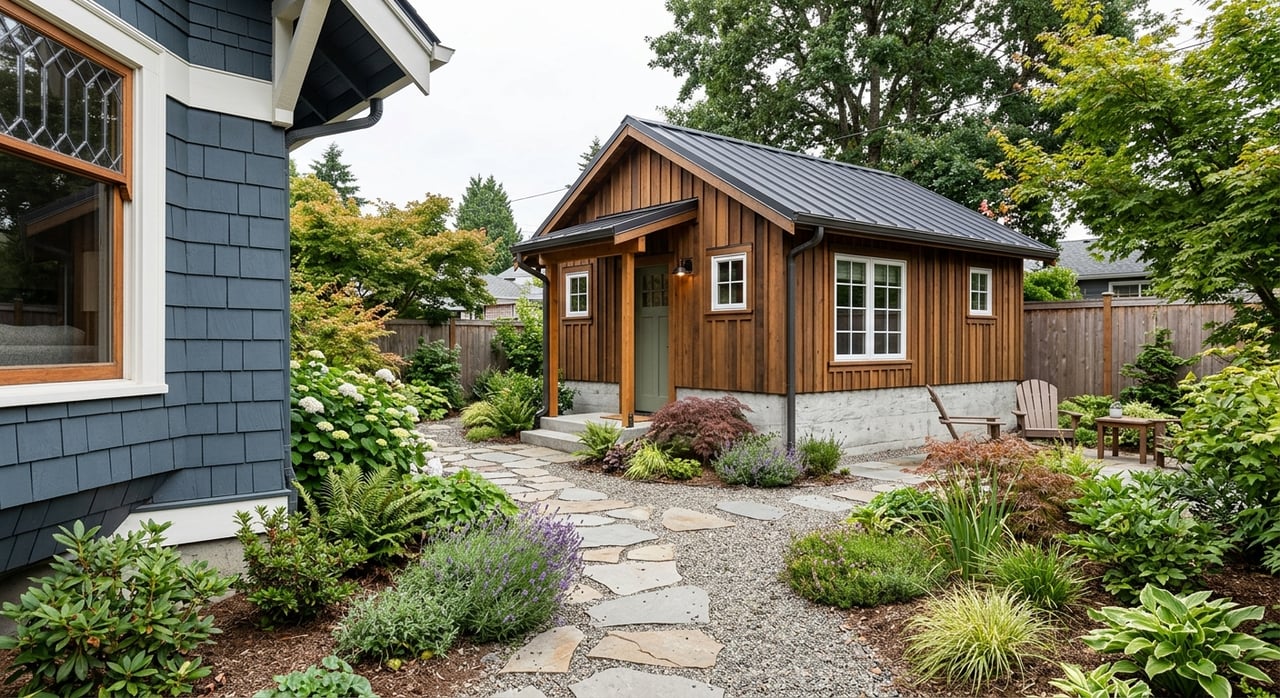
An ADU can be detached, attached, or internal. Typical ADUs in Portland are small homes or apartments sized to fit your lot and building standards. Many do not require on‑site parking. Rules evolve, so verify current size limits, utility setups, and permit steps with the City.
Why owners choose an ADU:
- Keep a single property profile while adding income or space for family.
- Lower total project cost than building a full second principal unit.
- Flexible use over time: long‑term rental, guest suite, office, or caregiver space.
What to watch:
- Separate metering, sewer, and electrical plans can add cost.
- Insurance and property taxes usually rise after construction.
- Financing construction requires a plan for cash or a loan.
Option 2: Duplex basics
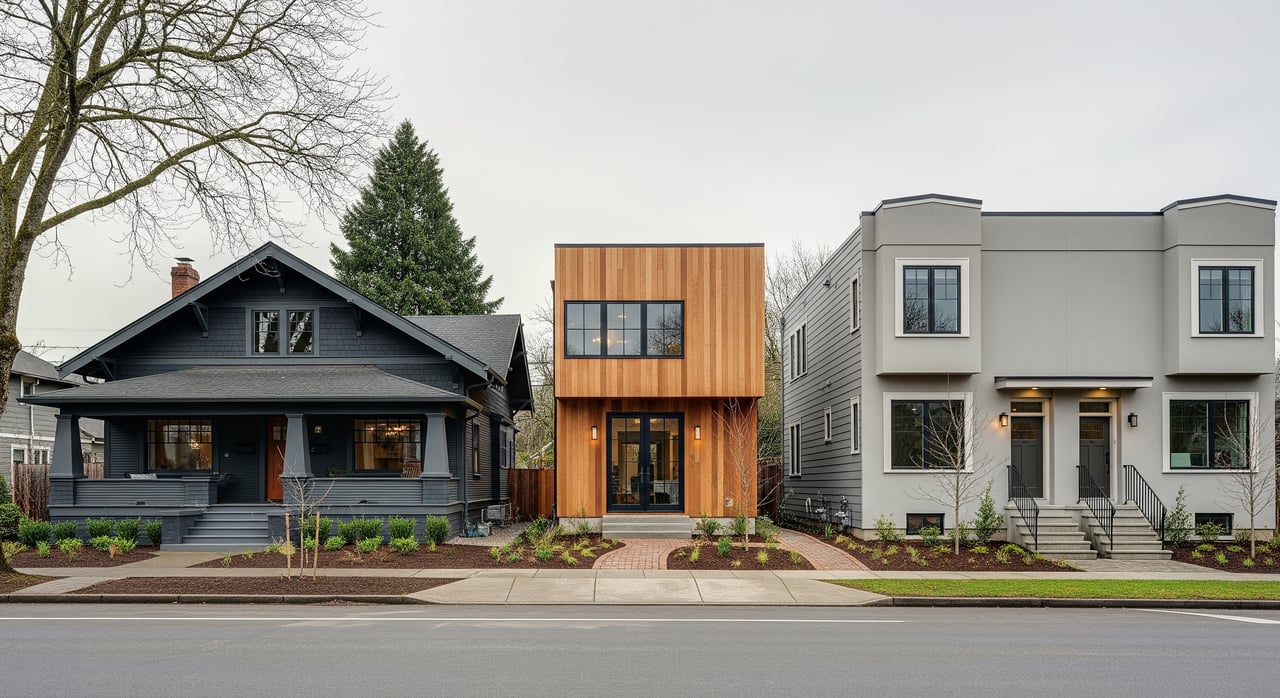
A duplex is two principal units on one lot. You can convert an existing house, add a new unit, or build new. Parking minimums are often reduced, but design, utilities, and code separation are more involved than most ADUs.
Why buyers choose a duplex:
- Two full rental units on one lot can lift total income.
- Owner‑occupants can use 2–4 unit loan programs that consider projected rent.
- At resale, investors and house‑hackers are a clear buyer pool.
What to watch:
- Higher build or acquisition cost than most ADUs.
- More management and maintenance with an additional full unit.
- Different appraisal and buyer pool dynamics than a single‑family with ADU.
Permits, timelines, and fees
Your scope drives the calendar. Recent local experience suggests the following planning windows in Portland. Exact timing depends on design, reviews, and the permit queue.
- ADU interior or attached conversion: roughly 2 to 9 months from design to permit issuance.
- Detached ADU new build: roughly 4 to 12 months.
- New duplex construction: roughly 6 to 18 months.
Expect building, mechanical, plumbing, and electrical permits. Utility upgrades, tree protection, and right‑of‑way work can add reviews and fees. The City updates fees and system development charges, so check current schedules on the Bureau of Development Services before you finalize a budget.
Typical costs and rent planning
Every site and scope is different, but here is how many owners frame the budget.
Cost categories:
- Soft costs: design, surveys, permit and plan review, utility studies, impact fees, inspections.
- Hard costs: site work, foundation, framing, MEP trades, finishes, appliances, landscaping.
- Contingency and carrying costs: financing interest, inspections, contingency for surprises.
Illustrative build ranges used for early planning:
- Interior conversion ADU: tens of thousands to low hundreds of thousands.
- Detached ADU: roughly $100k to $300k+ depending on size and finishes.
- New duplex: several hundred thousand to well over $1M total build cost based on size and site work.
Rent approach in Sunnyside:
- Pull fresh 30 to 90 day comps for 1‑bed and 2‑bed units within a tight radius.
- Use vacancy of 5 to 8 percent and management of 8 to 10 percent if you will hire it.
- Budget maintenance at 5 to 15 percent of rent depending on age and complexity.
Note: For property taxes, new improvements typically increase assessed value. Check local guidance with the Multnomah County Assessor.
Financing paths that owners use
ADU financing options:
- Cash, construction loan with a later refinance, or a renovation‑style mortgage if eligible.
- HELOC or cash‑out refinance to access equity for construction.
Duplex financing options:
- Owner‑occupant 2–4 unit mortgages are available through FHA, VA, and conventional lenders. Lenders often consider a portion of projected rent in underwriting. Review program details on HUD’s site and confirm the current guidelines with a local lender.
Key financing notes:
- Appraisals weigh permitted status and market comps. Documented rent potential helps.
- Construction loans require detailed plans, budgets, and draws.
Value and resale considerations in Sunnyside
How appraisers look at it:
- ADUs: appraisers compare to other homes with permitted ADUs. Stable rent can support value, but the market for ADU homes sets the ceiling.
- Duplexes: appraisers may use two‑unit comps and consider the income approach. The buyer pool can skew toward investors and house‑hackers.
Marketability:
- ADU keeps a single‑family profile with optional income, which appeals to a broad range of buyers.
- Duplex positions the property first as an income asset, which can be a plus for some buyers and a limit for others.
Taxes and insurance:
- Expect higher taxes and insurance with added units or improvements. Confirm specifics for your property before you commit.
Side‑by‑side math for Sunnyside (illustrative)
Below are simple calculators you can adapt. Replace the figures with current local bids and rent comps before you decide. These examples use conservative vacancy and expense allowances.
Scenario A — Add a 600 sq ft detached ADU
Inputs:
- ADU construction: $180,000
- Soft costs and permits: $20,000
- Total project cost: $200,000
- Expected rent: $1,700 per month = $20,400 per year
- Vacancy: 6 percent → effective gross income $19,176
- Operating expenses: 30 percent of effective gross = $5,753
Results:
- Net operating income (NOI): $19,176 − $5,753 = $13,423 per year
- Simple cash yield: $13,423 ÷ $200,000 = 6.7 percent
- Payback period: $200,000 ÷ $13,423 ≈ 14.9 years
Notes: If you finance construction, update the math with actual loan payments. Consider principal paydown and any value lift at appraisal when you refinance.
Scenario B — Buy an existing duplex in Sunnyside
Inputs:
- Purchase price: $700,000
- Down payment: 25 percent = $175,000
- Rents: Unit A $1,800, Unit B $1,600 → $40,800 per year
- Vacancy: 6 percent → effective gross $38,352
- Operating expenses: 40 percent of effective gross = $15,341
Results:
- NOI: $38,352 − $15,341 = $23,011 per year
- Simple leveraged yield on cash invested: $23,011 ÷ $175,000 = 13.15 percent
- With mortgage: assume $525,000 loan at 5 percent, 30‑year → annual payment ≈ $33,800
- Cashflow after debt: $23,011 − $33,800 = −$10,789 per year initially
Notes: Leverage can lift long‑term return on equity but may produce negative cashflow if rates and prices are high. Rents, interest rates, and your down payment move this result.
Sensitivity snapshots
Small changes in rent or costs can swing the outcome. Here are quick checkpoints using the scenarios above.
- If ADU rent is $100 higher per month: NOI rises by about $1,128 per year, improving yield by roughly 0.6 percentage points.
- If ADU build cost overruns by 15 percent: total cost becomes $230,000; yield at the same NOI drops to about 5.8 percent.
- If duplex rents rise $100 per unit: gross +$2,400 per year; after the same vacancy and expense ratios, NOI rises by about $1,344.
- If duplex rate falls 1 percentage point at refinance: the annual payment may drop several thousand dollars, which can flip cashflow positive. Model with your lender.
Which pays off for you?
Use your goals and balance sheet to choose the path.
Choose an ADU if you want:
- Lower total cost with flexible use and simpler resale as a single‑family home with bonus income.
- Space for family or a future office, with the option to rent.
- A phased plan you can finance with equity, cash, or a smaller construction loan.
Choose a duplex if you want:
- Two full rental units and a property positioned as an income asset.
- Access to owner‑occupant 2–4 unit loans that consider rent in underwriting.
- A house‑hack plan where you live in one unit and rent the other.
Next steps for Sunnyside owners
- Confirm your parcel’s zoning and overlays on Portland Maps.
- Review RIP2 allowances on the City’s Residential Infill Project page.
- Call the Bureau of Development Services to verify current permit, size, and parking rules for your plan.
- Collect two to three local builder quotes for your exact site and scope.
- Pull current rent comps for your block and unit sizes. Update the scenarios.
- Talk with a lender about HELOC, construction, or 2–4 unit mortgage options, and how projected rent will be treated.
- Budget for higher taxes and insurance. Check guidance with the Multnomah County Assessor.
If you want a clear read on what will work best on your Sunnyside property, reach out. I can help you price the options, pull local comps, and plan a smart path forward. Schedule a free market consultation with Devin Arthurs.
FAQs
What does Portland’s RIP2 allow on Sunnyside lots?
- RIP2 expands middle housing so many Sunnyside lots can add ADUs or create duplexes by right if they meet standards for height, setbacks, floor area, and any overlays. Confirm your parcel’s rules with the City before planning.
How long does it take to permit and build an ADU in Portland?
- Interior or attached conversions often run 2 to 9 months to permit; detached ADUs run about 4 to 12 months. Timelines vary with scope, reviews, and the permit queue.
What are typical ADU and duplex costs in Sunnyside?
- Early planning ranges often use $100k to $300k+ for detached ADUs and several hundred thousand to well over $1M for new duplex builds. Get site‑specific bids to refine your budget.
How do lenders treat duplex purchases for owner‑occupants?
- Many lenders offer 2–4 unit mortgages and may count a portion of projected rent in underwriting. Review current program details with a lender and check general info on HUD’s site.
Will an ADU or duplex raise my property taxes in Multnomah County?
- New improvements typically increase assessed value, which can raise taxes. For parcel‑specific guidance, review resources from the Multnomah County Assessor and confirm timing for assessments.
Which has better resale in Sunnyside: ADU or duplex?
- ADUs keep a single‑family profile with optional income, which can appeal to a broad buyer pool. Duplexes are positioned as income properties and often attract investors and house‑hackers. Value is driven by local comps and permitted status.